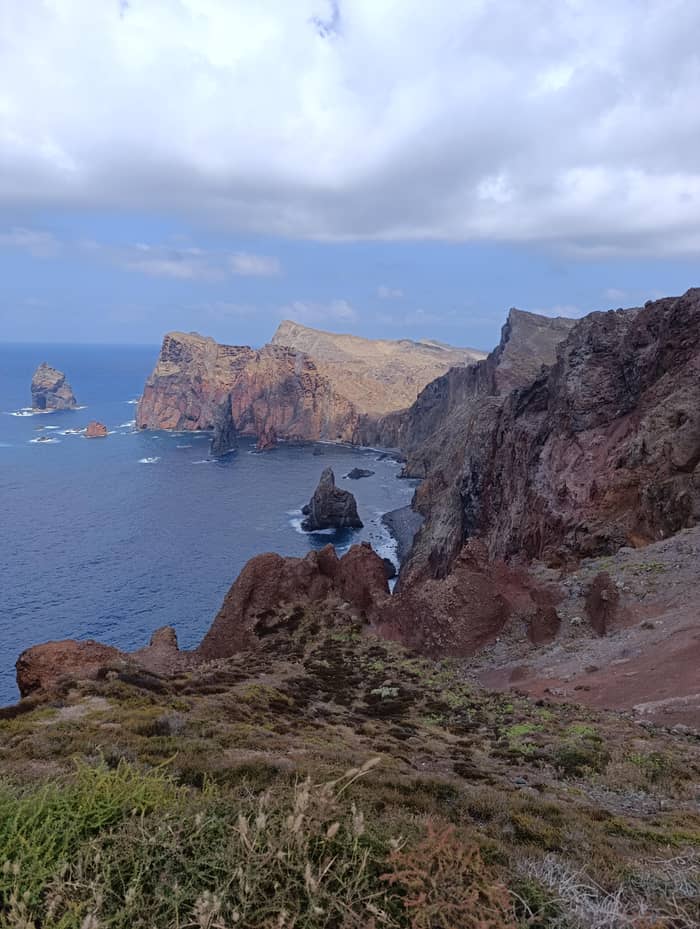
Waterproof
The wetter months
Nov, Dec, Jan, Feb, Mar
See this optionGuides
Language
Currency
See open dates€44 and up · cancel at no chargeChecklist you can tick
Preparation · 9 items
Check off each item as you go. Your progress stays saved on this device.
0 / 9 ready
You are good to go. Only the date and the pickup point are still open.
Claim a spotTemperatures and rain for every month from the nearest station, the cooler air and fog up at the peaks, and a checklist of what to wear and carry on the east tour.
Editorial team, madeiraeasttour.com · Updated November 24, 2026 · Reading: 7 min
Yes, with a jacket. In March the Funchal station records an average daily high of 19.5 °C and a low of 14.2 °C, with 6 wet days and 79 mm of rain over the month.1 That is mild by any standard, and the tourism board says winter days rarely drop below 15 °C.3 It is also wetter than April, which has 6 mm and 1 wet day at the same station.1
The tourism board says spring comes early on the island, with average temperatures between 18 °C and 22 °C and sun peeking out generously through the clouds.4 It also says Madeira can be visited all year, with spring and summer best suited to outdoor activities.5 So March sits at the start of that spring: a month of green hillsides, cool mornings at altitude and a few showers.
For an east tour the question is really about the mountain stops. The coast may be warm in March, but Pico do Arieiro rises to 1,818 metres, where the board reports fog and cooler air.6,2 Pack for two climates in one day, and March is a perfectly good month to go, as long as you accept that a cloud on the peak is part of the picture and not a reason to cancel.
Readers who search madeira quand partir want a plain answer, and here it is: any month works, and the east tour suits April to September best on the numbers. From April to September the station records 1 to 19 mm of rain a month and 0 to 3 wet days.1,1,1 From November to March it records 79 to 118 mm and 5 to 7 wet days.1,1,1,1
Temperature changes less than rain. The coldest monthly average high is 18.7 °C in February, and the warmest is 26.2 °C in August.1,1 The tourism board puts summer highs at around 25 °C, with no sweltering heatwaves.10 The gap between the seasons is a layer or two, not a change of wardrobe, and the real adjustment is between the coast and the high stops.
The station is a south-coast reading, and the east tour does not stay on the coast. On the board's reading, the south is the warm, dry side, whereas the north and the high ground catch more wind and rain.7 So read the monthly numbers as the best case for the coast and add a margin for the heights and the north side where the tour spends much of its day.
Month by month
Mid-month hours with no sun, and days when precipitation reaches 2.5 mm or above. Source: NOAA, station Funchal / Santa Catarina airport station, 13.3 km from the tour's stops at 49 m, 1991 to 2020.1
The station's wettest month is November, with 118 mm and 7 wet days, and January follows with 99 mm and 6 wet days.1,1 December adds 91 mm and 5 wet days, February 86 mm and 6, and March 79 mm and 6.1,1,1 These are not stormy figures, but they mean you should expect rain on some days, plan for it, and keep the date of your tour flexible where the booking allows.
The board's walking advice is blunt: January can bring both rain and scorching sun, so be ready for either.13 Its list for a day pack opens with waterproofs and a hat, then gloves and spare clothes.11 On an east tour that translates into a light waterproof jacket, a warm mid layer for the peak and shoes that grip on a wet path.
The listings add their own warning. The minibus day with lunch suggests packing a warm layer for the higher stops, even when Funchal feels mild in winter. On the tour sold here, bad weather may close the Pico do Arieiro road now and then, and another stop takes its place. Flexibility is the mood for these months, and a day that bends with the sky is usually a good day.
Pick by weather
Pick the line closest to your forecast and see what to pack.
If The forecast says rain in the north
A waterproof and boots
The board's list starts with waterproofs, and boots are essential on walks.11,12
If It is a warm, dry summer week
A hat and a light layer
Summer highs are around 25 °C, and the peak is still cooler.10,2
If I am going in December or January
Layers and a firm return
It can rain and it can scorch in January, and winter sunset is around 18:00.13,14
If The peak road may be closed
Stay flexible
One listing makes an alternative stop when the road closes.
If I want a swim
Swimwear in the bag
Sea temperatures range from about 18 °C to 24 °C.15
Seasons
Waterproof
Nov, Dec, Jan, Feb, Mar
See this option
Sun hat
Apr, May, Jun, Jul, Aug, Sep
See this option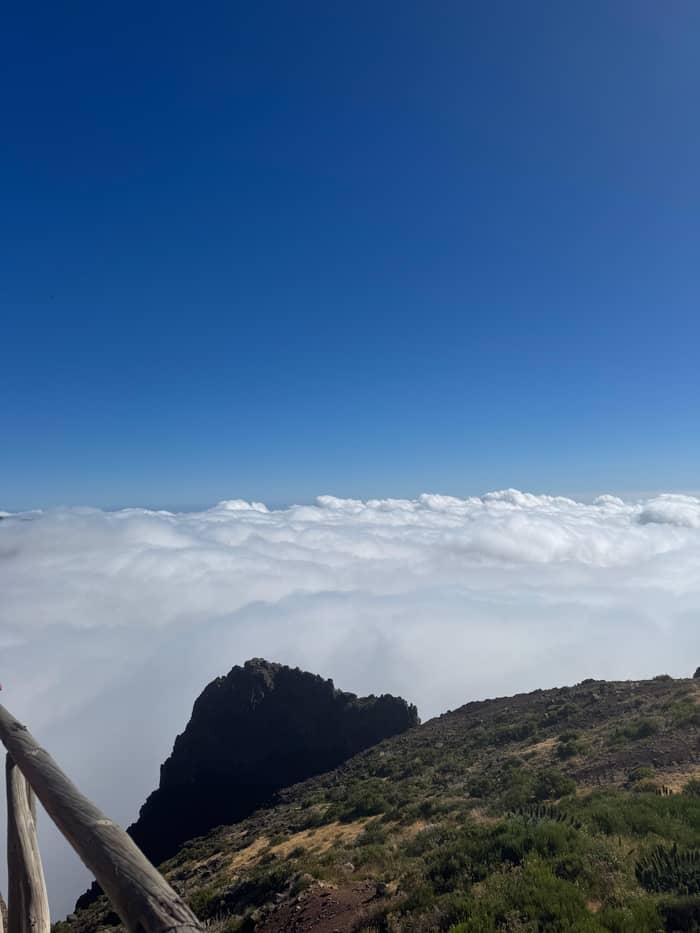
Both
Oct
See this optionFrom April the rain drops away. April has 6 mm and 1 wet day, May 1 mm and none, June 6 mm and none, and July 2 mm and none.1,1,1,1 August records 4 mm and 1 wet day, and September 19 mm and 3 wet days.1,1 These are the months in which a mountain view is most likely to be clear, although cloud can form at any time of year.
Heat is the new concern. The average daily high reaches 25.2 °C in July, 26.2 °C in August and 25.8 °C in September.1,1,1 On the coast that is warm, and at Pico do Arieiro it will still be cooler, so keep a light layer within reach all day. A hat and sun protection are sensible, and the board's walker list names a hat.11
Sea temperatures follow the air. The board gives around 18 °C in winter and 24 °C in summer, which makes a swim at a beach stop reasonable from late spring.15 Not every east day stops at a beach, so check your itinerary before packing swimwear, and count it as a bonus and not a necessity, since a dry towel is one more thing to carry through a long day of viewpoints.
Price your party
Enter how many travel and compare three east days for the month you choose.
Compare 3 alternatives
Enter how many travel and compare three east days for the month you choose.
≈
View≈
View≈
ViewStarting prices from GetYourGuide, converted at the ECB reference rate. You will see the exact price when booking.
Layers through the day
At pickup
The south is usually warmer and drier, so start light.7
At the peak
Mist and chill are common on the heights.2
In the forest
Fog is quite frequent at Ribeiro Frio.8
In the village
Down at the shore the day can turn bright and warm.2
At the cape
The eastern peninsula meets north winds and has no trees.9
October sits between the seasons. The station records an average high of 24.3 °C, 44 mm of rain and 3 wet days.1 That is wetter than September and far drier than November, which is why many travelers find October a good compromise: warm air, longer light than winter and rain that arrives in short spells.
The board's seasonal notes describe autumn and winter as mild, less crowded and good for hiking.5 Hiking is not part of every east tour, but the optional walk at Ribeiro Frio benefits from the same conditions. Pack a waterproof and expect to use it for a stretch, not all day, and keep the jacket in the day bag even when the morning starts bright.
A Madeira east side tour in October still passes through the same mix of coast, forest and mountain. Fog at Ribeiro Frio is quite frequent, according to the board, so it should not surprise you.8 The best preparation is flexibility and layers, and the booking terms help, since you can reserve now, pay later and cancel free up to 24 hours before.
Video
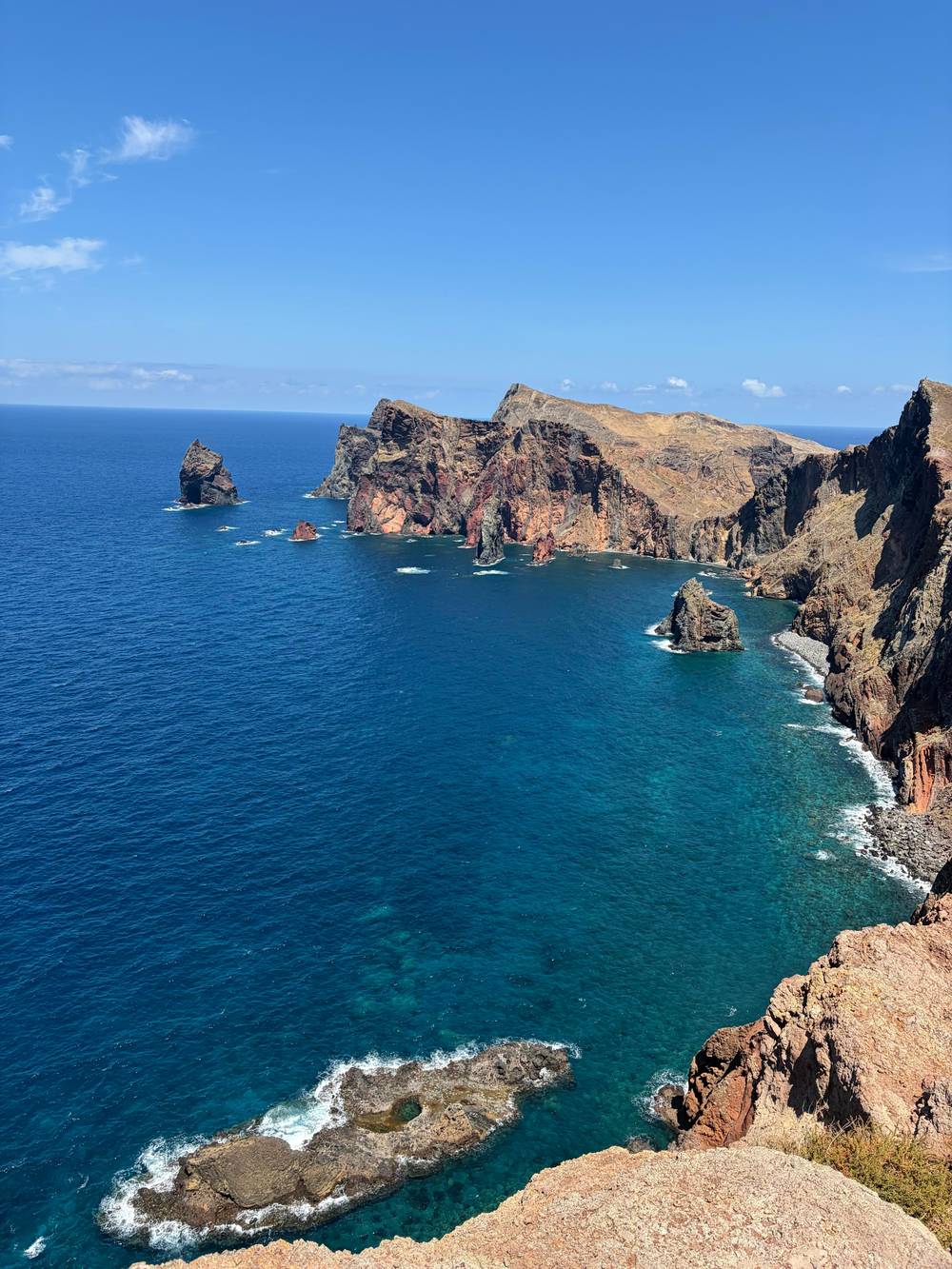
Hit The Road Madeira on YouTube · Until you tap play, no video is loaded.
Due to its mountainous terrain, the climate can vary significantly between the coast and higher altitudes. It is common to experience fog and cooler temperatures in the mountains, while it may be sunny and warm by the sea.
Everything above describes Funchal's airport station, which sits at 49 metres. On an east tour the road reaches Pico do Arieiro at 1,818 metres, and the board says the climate changes markedly between the coast and the heights, with fog and cooler temperatures in the mountains.6,2 No monthly figure here describes the peak, and we do not borrow one from another place.
The practical rule is simple. Dress for the peak and shed layers on the coast, not the reverse. A person who wears a jacket at the viewpoint and takes it off at the sea is comfortable all day, while a person who dresses for the beach shivers at the top.2 One of the newest English reviews of our tour makes the same point, suggesting a jacket because the weather varies from stop to stop.
The forest adds damp. Ribeiro Frio sits in a valley where fog is quite frequent, and the Balcões trail passes endemic laurel forest on a levada.8,17 A light rain jacket, which folds into a day bag, is the single most useful item for the whole route, since it handles fog, drizzle and wind at the high stops.
Day length matters on an 8 hour tour. The station's data gives 10 hours of sun above the horizon in December and 14.3 hours in June.1,1 The tourism board says the sun rises at about 08:00 in winter and sets at about 18:00, while in summer it rises at about 06:15 and sets at about 21:00.14,18 In winter the day is short enough that a late return can mean a dark road.
One listing collects guests between 08:00 and 09:00 and aims to return before 17:00, which fits a winter day with a little light to spare. Another cannot vouch for a 5:00 PM finish on shared tours. If you are travelling in December or January, ask for a firm return time and plan the evening after it, not around it.
Summer gives more room. With sunrise around 06:15 and sunset around 21:00, a tour has light from start to finish.18 That helps photographers, who find the soft light of the morning at the peaks and the late light on the coast equally useful. In every month, charge your phone before you go and keep the camera ready for the moments when the cloud breaks.
FAQ
May brings the station 1 mm of rain and no wet days, the lowest rainfall of its year.1
November has 118 mm of rain and 7 wet days at the Funchal station.1
Sources
Choosing an east Madeira day? Ask a real person here.